Cryptocurrency Kiosk Fraud: A Growing Threat to Older Oregonians
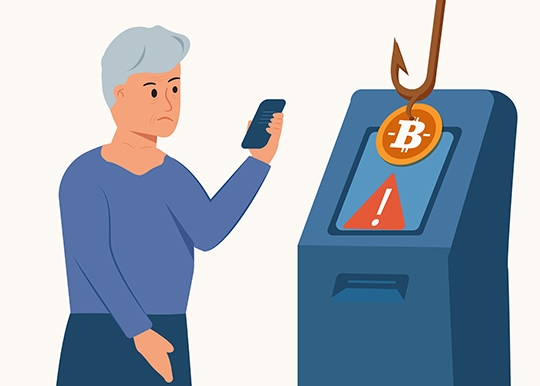
(3 Minute Read) — Cryptocurrency kiosks, often called Bitcoin ATMs, are becoming a key tool for scammers targeting older adults across Oregon. According to information provided by AARP Oregon, criminals are increasingly using these machines to steal thousands of dollars from unsuspecting victims.
These kiosks are commonly found in gas stations, convenience stores, grocery stores, and liquor stores. Unlike traditional bank ATMs, crypto kiosks are cash-only, largely unregulated, and designed to transfer funds directly into cryptocurrency wallets.
How the Scam Works
Scammers often impersonate government agencies, law enforcement officials, financial institutions, or businesses. They create a sense of urgency by claiming the victim faces arrest, account closure, identity theft, or other serious consequences unless immediate action is taken.
Victims are instructed to withdraw large amounts of cash and deposit the money into one or more cryptocurrency kiosks while remaining on the phone with the scammer. The funds are then transferred directly to the criminal’s digital wallet. Once the transaction is completed, recovering the money is extremely difficult and, in most cases, impossible.
The Financial Impact
The losses associated with cryptocurrency kiosk fraud are staggering. According to 2025 FBI data cited by AARP Oregon, there were 13,460 complaints nationwide, representing a 23% increase from 2024. Reported losses reached $389 million, a 58% increase over the previous year. Adults age 60 and older accounted for 75% of kiosk-related crimes, with an average loss of $41,607 per victim.
In Oregon alone, reported losses are significant. The FBI reported approximately $5.2 million in losses, while local agencies such as the Washington County Sheriff’s Office, Albany Police Department, and Medford Police Department have documented hundreds of thousands of dollars in additional losses.
Why Experts Are Concerned
AARP Oregon notes that cryptocurrency kiosks are frequently linked to fraud, money laundering, and other criminal activity. Because many victims feel embarrassed or ashamed, a large number of incidents go unreported, meaning the true scale of the problem is likely much larger than official statistics suggest.
Multiple state investigations have found that a substantial majority of kiosk transactions were connected to scams. These findings have prompted many states to take regulatory action, with some choosing to ban crypto kiosks altogether.
How to Protect Yourself
If someone contacts you demanding immediate payment through a cryptocurrency kiosk, treat it as a major red flag. Government agencies, law enforcement offices, and legitimate businesses generally do not require payment through Bitcoin ATMs or cryptocurrency transfers. If you feel pressured to act quickly, pause, verify the request independently, and contact a trusted family member, financial institution, or local law enforcement agency before sending money.
Contact Unitus for Assistance
If you suspect fraud, please contact Unitus online, by phone 1-800-452-0900, or via chat.
Final Thoughts
Cryptocurrency kiosk fraud is a rapidly growing threat that disproportionately affects older adults. Awareness remains one of the most effective defenses. By understanding how these scams work and recognizing the warning signs, Oregonians can better protect themselves and their loved ones from financial loss.
This article is based on information provided by AARP Oregon regarding cryptocurrency kiosk fraud and its impact on Oregon communities.
 English
  Español de México